
Transformative experiences, stacked
Thoughts sparked by L.A. Paul's book

I’m reading Transformative Experience by philosopher L.A. Paul. As usual I don’t remember how this book landed on my reading list, but it came in at the library so here it is.
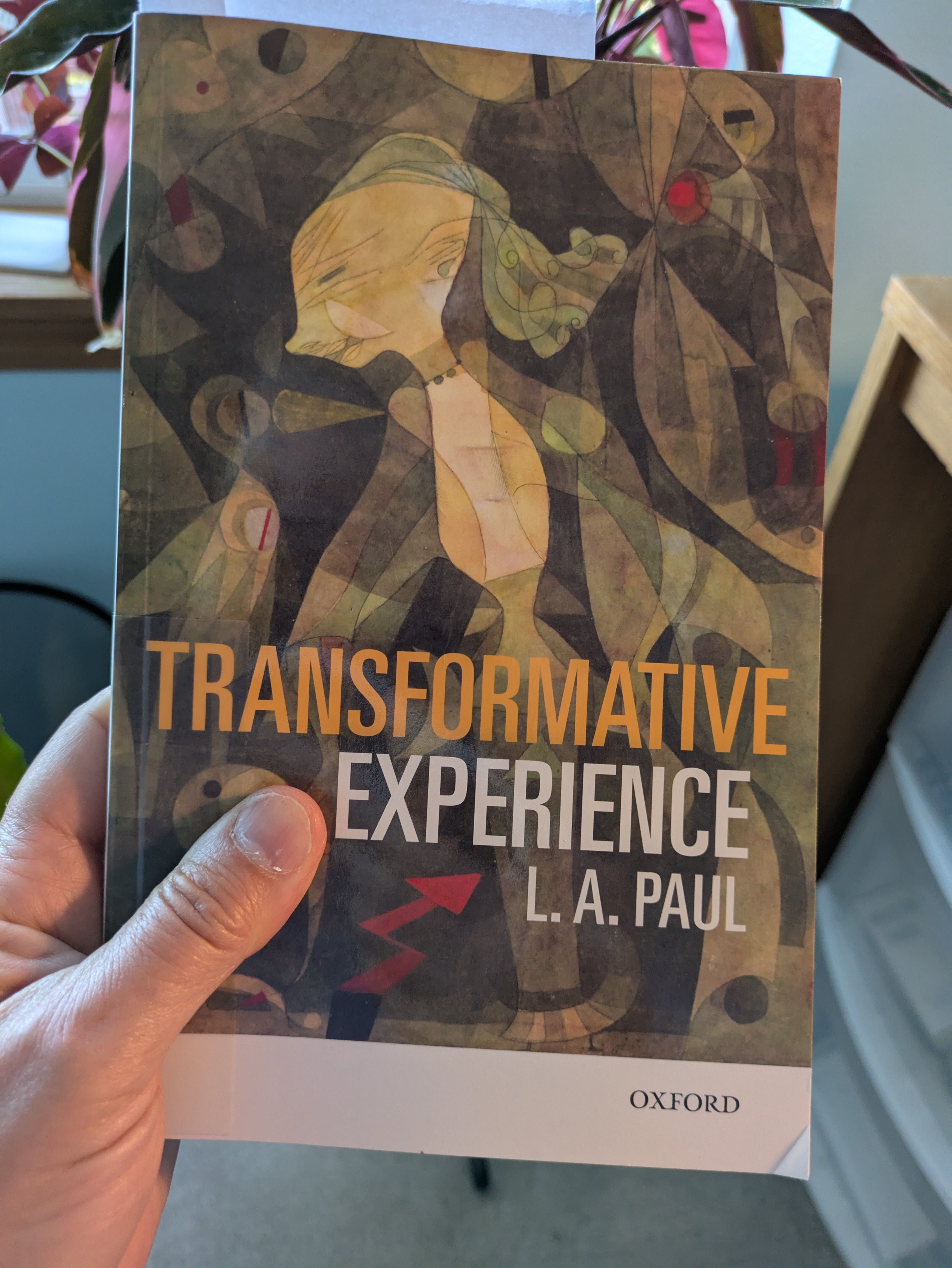
Dr. Paul explores ways to clarify decision-making in situations when we cannot meaningfully forecast how the outcome will affect us nor whether we will “like” it. Should you (hypothetically) become a vampire? That’s a great extended metaphor for the types of decisions she’s interested in. Should you have a child? A big real one. These decisions and experiences transform a person so completely that it’s impossible for most people to make a truly rational choice.
While she focuses on decisions, she acknowledges some transformative experiences that are not decisions. A passage on page 16 sent my mind down its own path. This is the passage:
The sorts of experiences that can change who you are, in the sense of radically changing your point of view … may include experiencing a horrific physical attack, gaining a new sensory ability, having a traumatic accident, undergoing major surgery, winning an Olympic gold medal, participating in a revolution, having a religious conversion, having a child, experiencing the death of a parent, making a major scientific discovery, or experiencing the death of a child.
Boldface type is mine.
I wondered what she’d say about experiencing the death of a parent when one is a child. Then it occurred to me that puberty is a transformative experience that would fit into this list. Maybe only the transition from newborn to kindergartener is a bigger transformation than maturing from child to adolescent.
So puberty changes who you are, and the death of a parent changes who you are, and for me they happened during exactly the same time time period. What are the implications?
These thoughts gave me a momentary glimpse of the profundity of both processes. My mother’s illness and death transformed me, by scouring away a massive foundation rock and severing thick tendrils of connection to family, while I was beginning an unstoppable natural transformation.
I have worked intensively since 2018 on understanding my childhood experience of loss, and this was the highest-level perspective I’ve yet seen. My vision of this double and counteractive transformation—one that advanced me and one that regressed me—reminds me of what I learned about caterpillars’ metamorphosis: they turn almost completely into liquid in the chrysalis. “Certain highly organized groups of cells known as imaginal discs survive” to let the adult creature coalesce. Maybe I too had imaginal discs that did, barely, let me hold onto my sense of self and cope successfully with growing up.
I’m not sure I’m equal to the challenge of reading Transformative Experience cover to cover, with its technical jargon like “decision theory,” “cognitive modeling,” and “epistemically transformative but not personally transformative.” (Which I think means you learned a lot but you didn’t turn into almost a new person.)
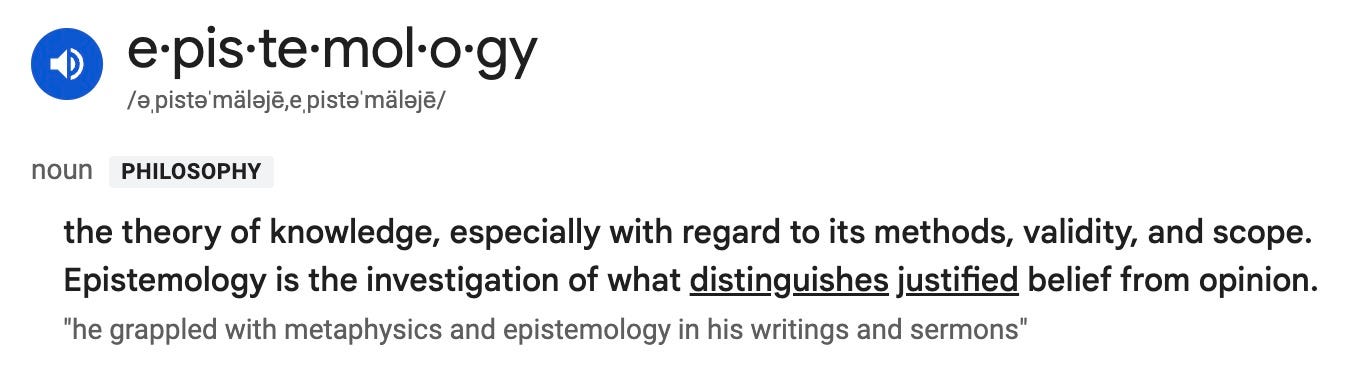
I did, though, finally learn to remember the meaning of the word “epistemology.”
I'm certain it was far less traumatic than losing a parent as a child, but my mother died a couple of months after I graduated college and was starting my 9-5 work life. I hated everything about my life at that point. Too much negative change at once. I'm pretty sure I was depressed all the time, but in 1984, I didn't know what that was. I've read before that doubling or tripling up on life changes can really impact a person's well-being. I'm sure the double shot took a lot out of you. Smart to try to parse it.
Love this breakthrough, Fran!